Consulting news
McKinsey's AI Interview With Lilli: What Changes for Candidates (and What Doesn't)
McKinsey is testing an interview step where candidates solve a case together with the firm's own AI assistant. Here is what is known, what interviewers look for, and how to prepare without changing everything.
Editorial team · 19 October 2026 · 6 min read
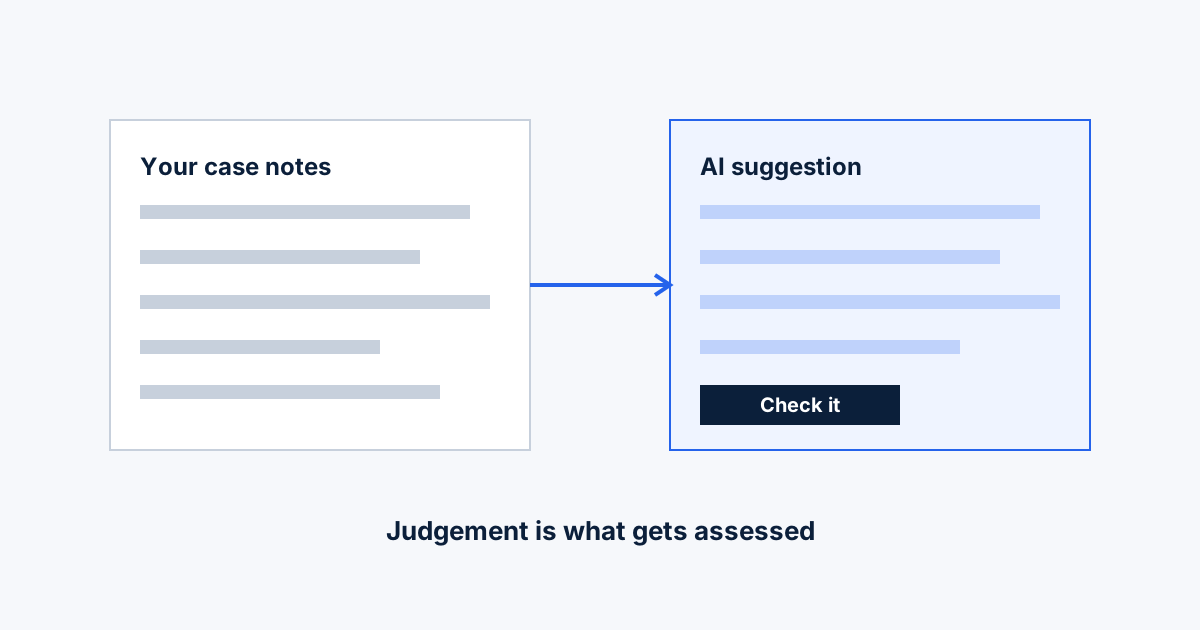
For years, the case interview has looked the same: a business problem, a pen, a sheet of paper and an interviewer watching how you think. McKinsey is now testing a new step. In a pilot, candidates work through a case together with Lilli, the firm's internal AI assistant, and interviewers watch how they use it.
What McKinsey is testing
According to Harvard's career services, which described the format on 1 October 2026, candidates analyse a case and refine their recommendation using Lilli. The exercise is not pass or fail: interviewers review how candidates interact with the tool. Fortune reported in January 2026 that the pilot is an additional final-round step for some North American candidates, alongside the usual case and personal experience interviews.
The context explains the move. McKinsey's CEO Bob Sternfels said the firm went from about 3,000 AI agents to about 20,000 in roughly eighteen months, working alongside some 40,000 employees, and that every employee should soon work with one or more agents. A consultant who cannot work with these tools, or who trusts them blindly, is a risk for the firm.
What interviewers look for
- Curiosity: do you ask the AI the right questions, the ones that move the case forward?
- Scepticism: do you check its numbers and spot when an answer is generic or wrong?
- Judgement: do you adapt its output to this client, this market, this constraint?
- Ownership: is the final recommendation yours, with reasons you can defend?
In other words, the exercise tests the same thing as a classic case, in a new setting. A candidate who structures well, reasons with numbers and synthesises clearly will do well with or without an AI assistant. A candidate who copies the AI's first answer will do badly.
What does not change
| Still essential | New in the AI exercise | |
|---|---|---|
| Structure | A clear, case-specific framework | Using it to decide what to ask the AI |
| Maths | Fast, clean mental calculations | Checking the AI's figures, not just producing your own |
| Exhibits | Reading charts and tables for the 'so what' | Judging whether the AI's reading is right |
| Synthesis | Answer first, three reasons, next steps | Saying where you disagreed with the AI and why |
McKinsey's own rules are also clear: candidates may use AI to polish a CV or rehearse questions, but not during assessments or to write their interview answers. Everything you say in the interview must be yours.
How to prepare
- Keep practising classic cases out loud. They remain most of the process, at McKinsey and at BCG and Bain.
- Train your checking reflex: whenever you see a number, ask yourself whether it makes sense and how you would verify it.
- Practise disagreeing politely: 'This estimate looks high to me, because…' is a sentence interviewers love.
- Work with an AI tool on a past case, then list what you had to correct. That list is your best preparation.
- Keep your synthesis human: a clear recommendation, the two or three facts behind it, the main risk.
Will BCG and Bain follow?
Nothing official yet. Observers expect other firms to test similar formats, but for now BCG and Bain recruit with their usual case and fit interviews. The safest plan is the same for all three: master the classic case, and get used to working with AI tools critically, because that is what the job increasingly looks like.
Frequently asked questions
Does McKinsey use AI in every interview now?
No. The Lilli exercise is a pilot, reported as an additional final-round step for some candidates. The case and personal experience interviews remain the core of the process.
Do I need to learn prompt engineering?
No. Interviewers look at judgement: how you question, check and adapt the AI's output. Clear thinking matters more than clever prompts.
Can I use AI to prepare for consulting interviews?
Yes, for practice and for polishing your CV. McKinsey does not allow AI during assessments or to write your interview answers.
Sources